
 en
 русский
 Español
 Deutsch

How to Choose a Tool Bag: A Practical Guide for Tradespeople and Buyers
Content
- 1 How to Choose a Tool Bag That Fits the Work, Not Just the Shelf
- 2 Start with the job, not the catalogue
- 3 Carrying format is the first real decision
- 4 Opening style, pockets, and the reach test
- 5 Capacity, weight, and the walking you actually do
- 6 Material and construction: where the budget separates itself
- 7 A simple buying sequence
- 8 The bag should disappear into your day
How to Choose a Tool Bag That Fits the Work, Not Just the Shelf
A tool bag is a small piece of infrastructure. It decides how quickly you reach a fitting, how safely a tester travels, and how much of the day is spent searching instead of working.
Start with the job, not the catalogue
The most common mistake in tool bag selection is starting with a product page. A bag is not a shelf; it is a moving container. The right choice begins with a short, honest list of what you carry, where you carry it, and how often you open it. A service electrician who climbs three floors with testers, tapes, and a drill has a different problem from a woodworker who works mostly within ten metres of a bench. Both need organisation, but they do not need the same shape.
The useful questions are practical: Which tools leave the bag every hour? Which ones stay inside all day? Do you work in wet weather, on gravel, up ladders, or in finished interiors? Will the bag go into a van, a cabinet, or a site locker at night? These answers narrow the field faster than a list of features.
A tool bag earns its place when it makes the next task faster without asking your shoulders to pay for it.
Info
Write down the five tools you reach for most often. If a bag cannot make those five easy to reach, its extra pockets are decoration.
Carrying format is the first real decision
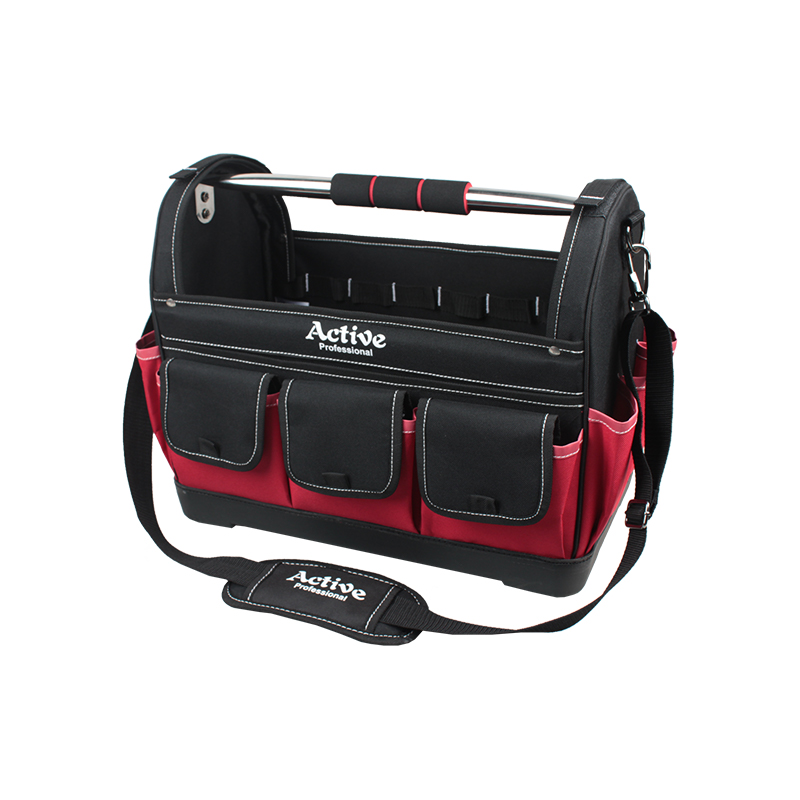
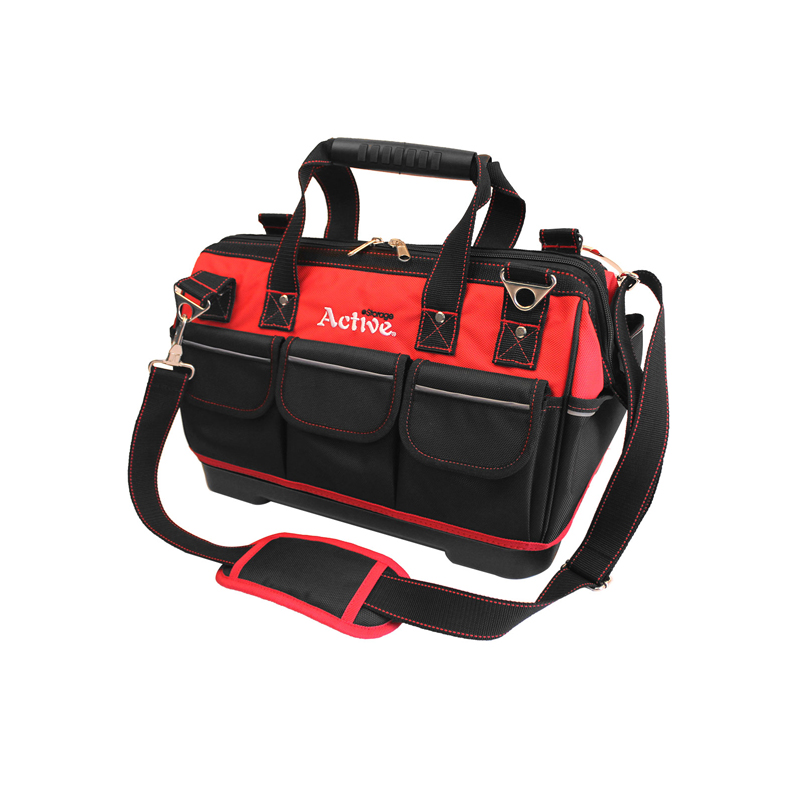
Carrying format is the first decision because it determines posture, access, and how much weight you can reasonably move. A hand tote is excellent for short carries and bench work. A backpack distributes weight across both shoulders and frees your hands on stairs. A waist pouch keeps a small kit close without a full bag. A trolley removes load from the body but demands floors, thresholds, and vehicle space.
- Hand tote: simple, quick to open, best for short carries and van-to-bench movement.
- Backpack: stable on stairs and long walks, with both hands free for tools or parts.
- Waist pouch: ideal for repeated small-tool access on ladders and maintenance rounds.
- Trolley: useful for heavy kits and long flat routes, but not a cure for stairs.
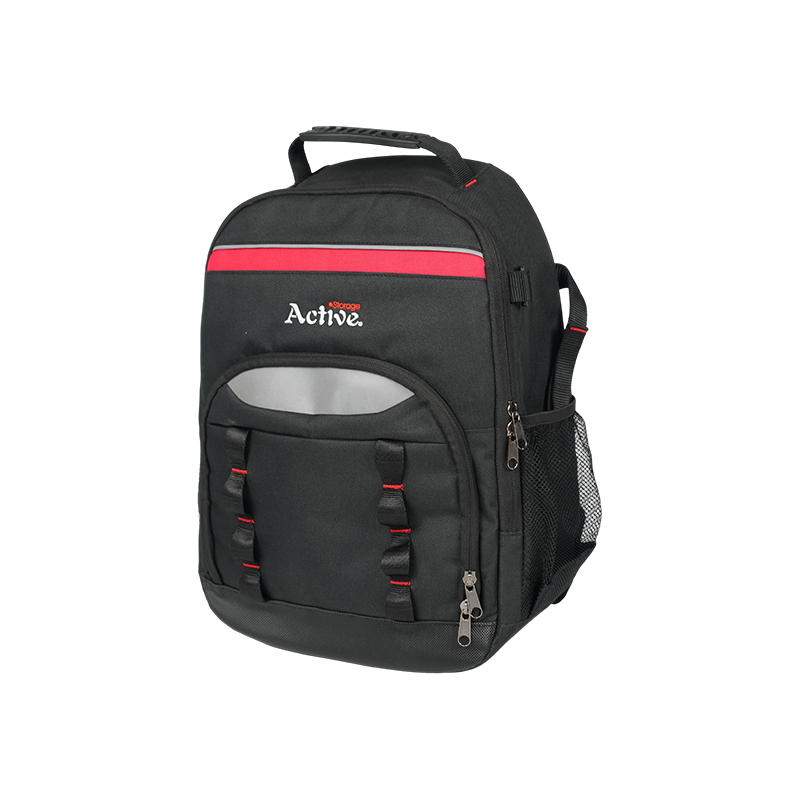
Backpacks are especially strong for multi-floor service work. They keep both hands free, which matters on ladders, in tight plant rooms, and when carrying a replacement part. The trade-off is that every item is behind you, so compartment discipline matters more. If you need a starting point, browse our tool backpack range to see how hard bases, USB ports, and trolley handles change the same basic format.
 Heavy Duty Large Capacity Electrician Trolley Tool BackpackA 44.09 lb-capacity trolley backpack in 1680D polyester, with 10 tool loops and a telescopic handle for electricians moving heavier kits across large sites.View Product →
For electricians carrying a heavier kit, a large-capacity trolley backpack can be a sensible reference point: it keeps backpack organisation but adds a relief option for long walks or large sites.
Do not choose a backpack simply because it looks professional. Choose it because your route includes stairs, because your hands are often full, or because you need both shoulders engaged rather than one arm loaded.
Opening style, pockets, and the reach test
Opening style is the next practical filter. A wide-mouth or open-reel bag lets you see the whole load at once. That is a real advantage at a bench or in a van, where you need to scan for a fitting or a meter without unzipping three compartments. A zipped bag protects contents from rain, dust, and vibration, but it can slow you down if the opening is narrow or the lid folds back into your hand.
Pockets should divide work, not hide it. A bag with thirty pockets is not automatically better than a bag with twelve. The question is whether each pocket maps to a real habit: testers here, screws there, drill bits in a compartment you can open with gloves on. Deep, narrow pockets can swallow small parts; shallow, wide pockets can let them slide together. The best layout is the one you can describe out loud after a week of use.
Success
The reach test is simple. Put the bag on the floor, fill it with your normal kit, and try to retrieve the three most-used items without moving your feet. If you have to unpack the bag to find them, the layout is wrong.
At the waist, a pouch should sit close without riding up when you squat or climb. Belt clips, padded panels, and modular attachment points matter more than raw pocket count. The same rule applies here: the pouch should support quick, repeated access, not become a small suitcase.
 Heavy Duty Electrician Multi-Pocket Belt Tool PouchA 15 lb belt pouch with five tiered pockets, reinforced molded bottom and swing-link hammer loop for stable, repeated access on electrical work.View Product →
For electricians who want a compact organiser rather than a full bag, a professional multi-pocket tool pouch is the kind of shape to compare. Look for a stable belt interface and pockets that stay open when you need them.
Capacity, weight, and the walking you actually do
Capacity is usually quoted in litres or inches, but the useful measure is the weight you will carry and the distance you will carry it. A large bag that stays in a van can be generous. A large bag that goes up four flights of stairs every morning needs a different judgement. The further the walk, the more the carrying format matters and the less the extra pocket count matters.
For site teams moving between floors, the trolley tool bag range can be a better fit than a heavy shoulder bag, provided the route is wheel-friendly. A trolley is not a shortcut around weight; it is a way to move weight without loading your body on every trip. The penalty appears at kerbs, stairs, and gravel.
 Multi-Pocket Heavy-Duty High-Capacity Trolley Tool BagA 55.12 lb trolley tool bag with 26 pockets and waterproof polyester, suited to moving a large kit on wheel-friendly routes between floors.View Product →
Use a trolley when the load is genuinely heavy and the path is mostly flat; use a backpack when the path is vertical; use a waist pouch when the kit is small and the access is constant.
A quick format comparison
| Format | Best for | Capacity signal | Carry comfort | Watch-out |
|---|---|---|---|---|
| Hand tote | Bench-to-van, short carries | Medium | One hand or shoulder | Open top can spill |
| Backpack | Multi-floor service, hands-free work | Medium to high | Two shoulders | Heavy loads sit high on the back |
| Waist pouch | Ladders, small kits, repeated access | Low | Waist and hips | Overloading causes fatigue |
| Trolley | Large kits, long flat walks | High | Low body strain | Stairs and rough ground |
| Bucket organiser | Maintenance, garden, vertical storage | Medium | Hand or shoulder | Less structured than a bag |
Material and construction: where the budget separates itself
Material names can sound impressive without telling you much. Reinforced polyester, ballistic nylon, rubber bases, and metal frames all have a place, but construction matters as much as the label. Look at the base first. A hard base or rubber bottom protects the bag from wet floors, gravel, and the small drops that happen every day. A soft base saves weight but wears faster if you set the bag down on rough ground.
Warning
Do not judge weather resistance from the outer fabric alone. Check the base, the zipper treatment, and the way the seams are finished.
Then look at seams, zippers, and handles. A waterproof shell is not a waterproof bag if water enters through the zipper or the seam. A handle that flexes under load will tire your hand even when the bag is not fully packed. A shoulder strap that is broad and padded distributes weight better than a thin strap with a fashionable colour.
Metal frames and rigid bases add weight, but they also stop a loaded bag from folding in on itself. That matters when you carry long tools, when the bag sits on a moving van floor, or when you need to open it with one hand. The right structure is the one that holds its shape when half full, not only when photographed empty.
Danger
A bag that cannot stand or open cleanly when loaded will slow you down every day. Test it full, not empty.
The best value is not the lowest price. It is the bag that survives the route you actually work.
A simple buying sequence
Use this sequence when comparing options, whether you are buying one bag for yourself or specifying a range for a team.
- List the tools you carry daily, then weigh them.
- Map the route: stairs, kerbs, gravel, ladders, van, site locker.
- Choose the carrying format before the pocket count.
- Test the opening and the reach with your own tools.
- Check the base, handle, shoulder strap, and main zipper.
- Confirm fabric, seams, and weather protection for your environment.
- Load the bag fully and walk a realistic distance.
- For trade buyers, ask how the supplier handles samples, custom colours, and production consistency.
That last point matters more than it seems. A tool bag range can look coherent in a catalogue but fail in the field if the handle, base, or zipper changes between batches. Consistent construction is part of the product, not an administrative detail.
The bag should disappear into your day
A good tool bag does not call attention to itself. It holds the weight, keeps the frequently used items within reach, and lets you move from van to job to van without a mental inventory. The right choice is rarely the largest or the most feature-heavy. It is the one whose carrying format, opening, material, and capacity match the work you do most often.
At Seaark, we have spent years building tool bags for professional use, and the same principle holds in our own development work: start with the route and the tools, then design the structure around them. Whether you are choosing a bag for a single trade or planning a range for a distribution partner, the practical questions are the same. Get those right, and the bag becomes quiet equipment: reliable, familiar, and ready.






We are a professional enterprise engaged in exporting various types of toolkits.
We firmly believe that 'quality is everything, service enhances value'.
-
+86-15298800699

-
+86-512-58670375

-
karen@kun-bag.com

-
Building 11, No. 93 Chengang Road, Zhangjiagang City, Jiangsu Province, China

Copyright © Zhangjiagang Seaark Tools Industrial Co., Ltd. All Rights Reserved.
Custom Electrician Tool Backpack Manufacturers