
 en
 русский
 Español
 Deutsch

Tool Bag With Tubular Handle: Frame Design, Load and Trade-by-Trade Guide
A tubular handle looks like a small design decision. It is not. On a loaded bag it decides where the weight sits against your knuckles, how wide the mouth opens when you set it down, and whether the whole thing still stands upright after a season of being dragged across a slab. After more than two decades of making tool bags for export, we have learned that the handle is usually the first thing a buyer touches and the last thing they forgive.
Content
Why the Handle Is the First Thing Anyone Judges
Watch how a bag gets picked up on site. Nobody reads the label. They hook a finger under the handle, lift, and decide in about a second whether the bag feels honest. A tubular handle — a steel or aluminium tube bent into a frame and anchored into the body — gives that second a very different answer from a folded webbing strap. It spreads the load across the palm instead of cutting into it, and it holds the mouth of the bag rigid while everything else hangs from it.
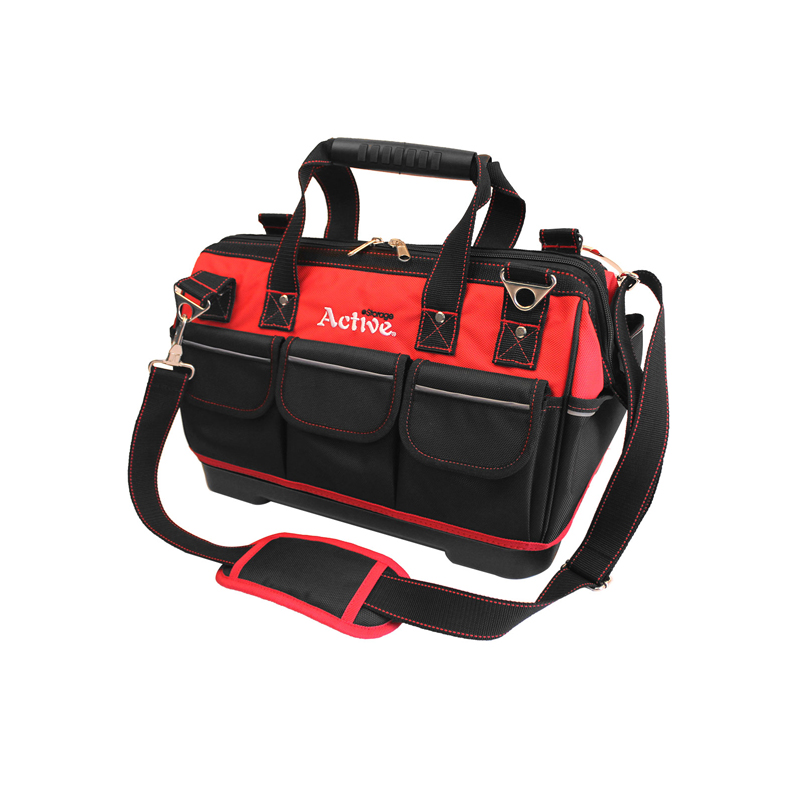
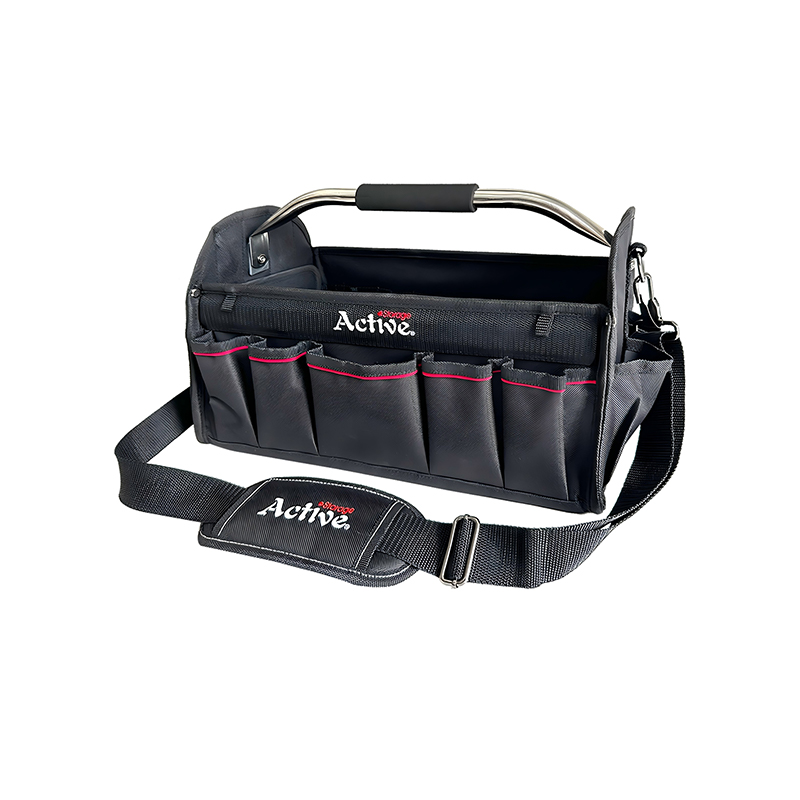
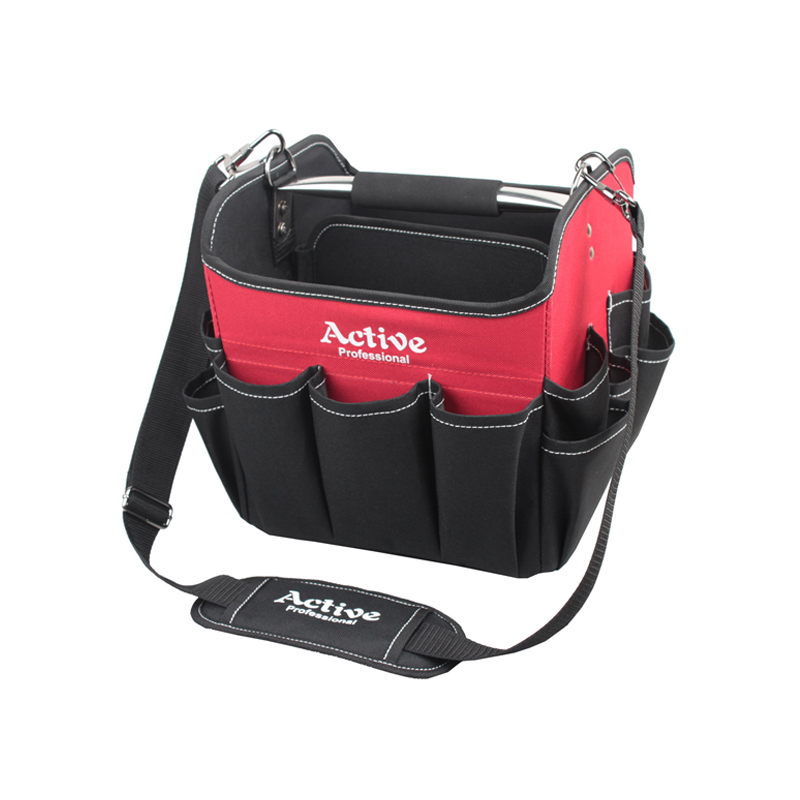
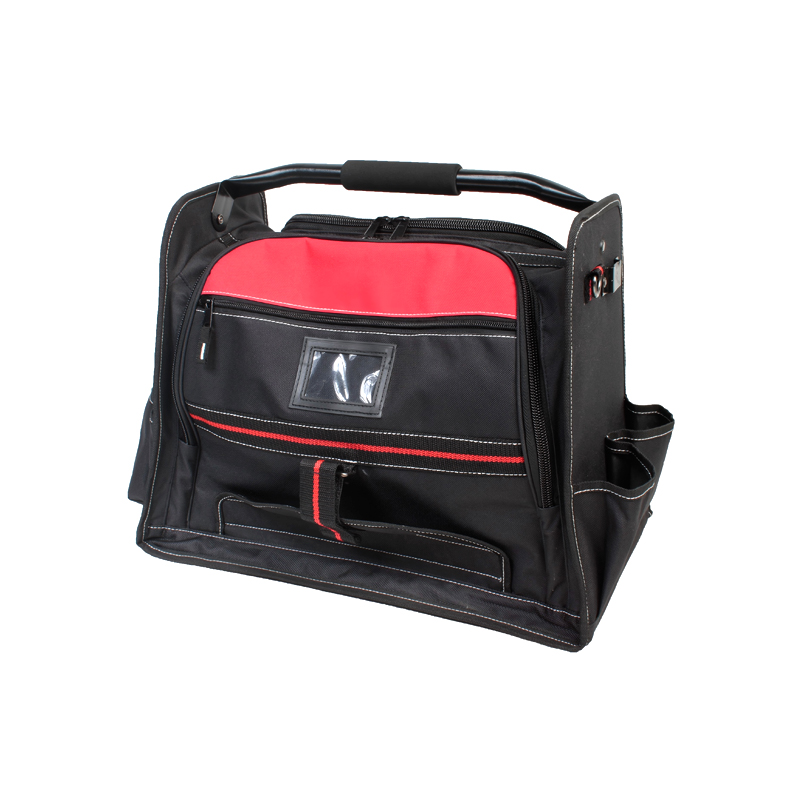
That rigidity is the real product. Of the 61 models we currently build across eleven categories, nine are tubular-handle designs, and they are the ones partners ask about when their end users complain that a bag "collapses" the moment it is opened. You can see the full spread on our tool bag range.
What a Tubular Handle Actually Changes
Three things shift when you move from a soft grip to a tube, and all three are practical rather than cosmetic.
- Load path. The tube carries weight into the frame and the base instead of into a single seam, so the stress is shared by the whole structure.
- Access. The mouth stays square and open, which means one hand can reach in while the other is still holding a drill or a tester.
- Standing stability. A rigid frame paired with a hard base lets the bag sit up on its own rather than folding over your tools.
The trade-offs are honest ones. A tube adds weight and cost, and on a small pouch it is simply unnecessary. Where it earns its place is in the middle and large formats, especially when the bag is opened and closed dozens of times an hour.
| Handle type | How the load feels | Opening behaviour | Where it earns its place |
|---|---|---|---|
| Tubular steel frame | Weight spreads across the palm; no edge cutting in | Mouth stays square and open; the bag can stand | Site work, repeated access, medium to large bags |
| Rigid plastic bar | Lighter overall, but can flex under a heavy load | Mouth stays fairly open | Mid-size bags where packed weight matters |
| Wide webbing grip | Comfortable when new, compresses over time | Bag tends to fold inward when set down | Light pouches and tool rolls |
| Folding tubular frame | Same lift as a fixed tube, with one extra hinge | Stays open when locked; check the lock | Crews with limited van or locker space |
The pattern is consistent: the more often a bag is opened, the more quickly a tubular handle pays for itself.
The Details That Decide Whether the Bag Lasts
The base is the second handle
A tube transfers load downward, so the base has to accept it. Rigid bases, rubber bottoms and reinforced foot pads are not decoration; they are what stops a bag from wearing through at the corners within the first year. Our rubber-base professional electrician tubular handle bag pairs a steel tube with a moulded rubber bottom for exactly this reason — the frame and the base are designed as one system rather than two parts.
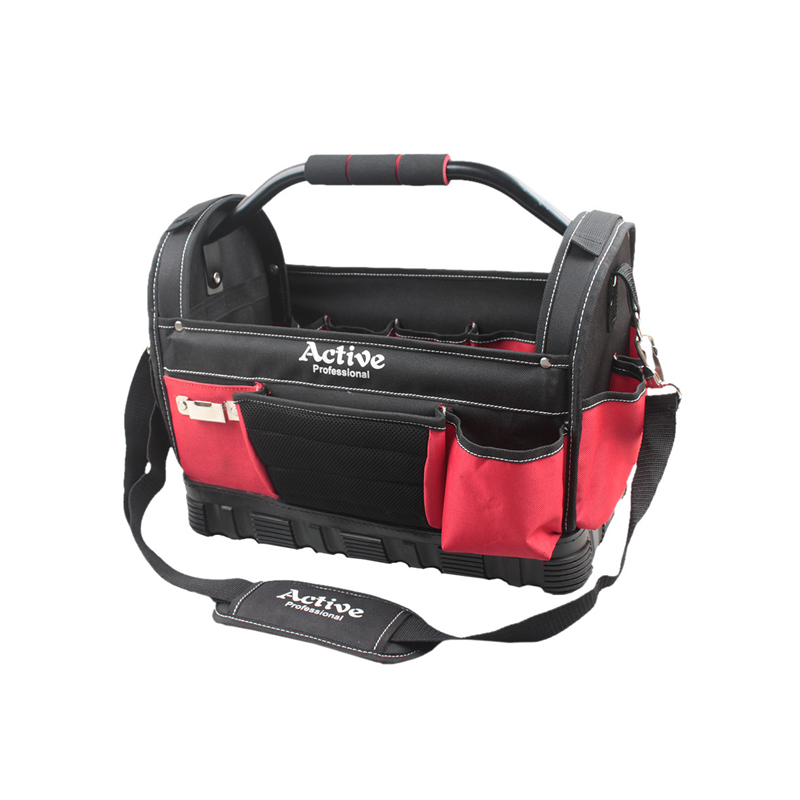 Rubber-Base Electrician Tubular Handle Tool Bag T012Steel tubular handle and moulded rubber base support a 44.09 lb load, with 23 pockets and an adjustable padded handle for electrical work.View Product →
Fabric, thread and the seams that fail first
600D polyester is the working standard for heavy-duty bags, and it is what most of our tubular-handle models use. The fabric itself rarely fails first — the stitch line where the handle frame meets the body does. Look for box-X stitching, doubled thread at the anchor points, and a lining that does not pull away when the bag is fully loaded.
Pockets that follow the hand
A rigid mouth makes the internal layout matter more, not less. Lined pockets, hanging rings and a clear front-to-back order let an electrician or a carpenter reach in without looking. When we develop a new model, we usually build the pocket layout around a real tool list before we draw the outside.
Matching the Bag to the Trade
Electricians and electrical contractors
Electrical work is the category that shaped most of our tubular-handle range. Testers, drivers, cable, tape and a drill all need to be reachable with one hand while the other hand is holding a panel. Deep lined pockets, a rigid mouth and a rubber base matter more than raw volume. Many crews also pair the open bag with a belt pouch for the tools they touch every few minutes.
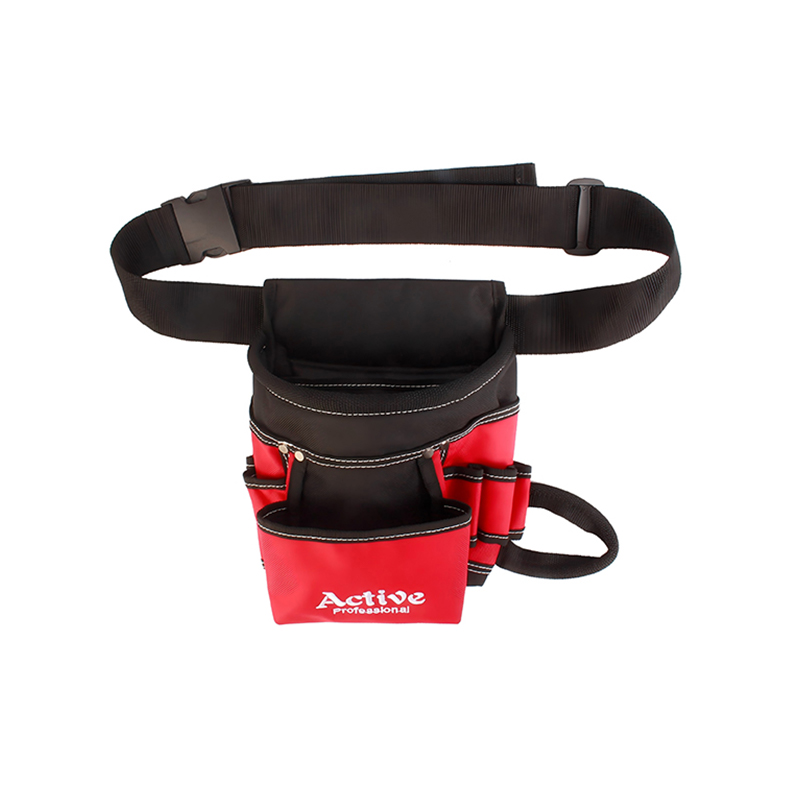 Electrician Belt Clip Tool Pouch and Work Belt SetQuick-release belt clip, 12 pockets and a padded work belt keep wire strippers, multimeters and drivers accessible; reinforced stand-up base aids one-handed job-site use.View Product →
Woodworking and carpentry
Chisels, squares, tapes and small power tools are heavy and awkward shapes. Woodworking bags need a wide opening so a saw can be dropped in without being threaded through a gap, and a base stiff enough that the bag does not tip when you lean a level against it. Our woodworking-specialised model is built around that wide, upright opening and an ultra-sturdy frame.
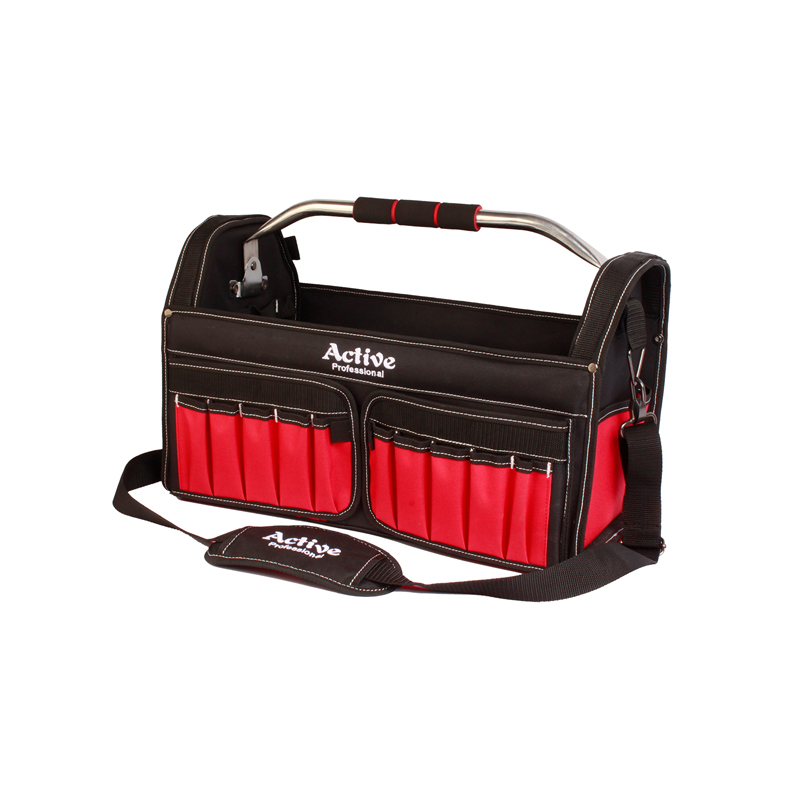 Woodworking Large-Capacity Open Tool Bag T007Water-resistant 47 x 26 x 30 cm bag with 42 pockets, open top and tubular handle, made for chisels, marking tools and small handsaws.View Product →
Automotive repair and detailing
In a service bay the bag travels with the technician rather than the other way around. A steel handle and a hard base survive being set down on concrete and nudged against a tyre. For detailing work the priority shifts towards a wide opening and softer internal storage, so polished surfaces are not scuffed in transit.
General installation and maintenance
For plumbers, HVAC crews and facilities teams the requirement is usually one bag that covers a wide spread of small jobs. That is where multi-pocket layouts and adjustable shoulder straps sit alongside the tubular handle rather than replacing it.
Sizing, Weight and the Folding Question
Most specification conversations come down to three questions, and they are worth answering before anything else is decided.
- How far does the bag travel — by hand, over the shoulder, or on a trolley?
- How wide does it need to open — the mouth should match the largest tool it carries.
- Does it need to fold flat — a folding frame saves van space but adds a hinge point.
Folding tubular frames are genuinely useful when storage space is tight. They are less useful when the bag lives on a bench all day, because every hinge is a wear point that has to be engineered properly.
A bag is judged in the first second and again in the fifth season. The handle is the only part that gets to vote twice.
How These Bags Are Made and Checked
We have been exporting tool bags from Zhangjiagang since 2004. Our main domestic factory, Zhangjiagang Haiyi Tool Bags, has been running since 2012 alongside a second domestic plant and a production site in Cambodia. Those factories are audited every year against BSCI, SEDEX, FCCA and SCS, and our in-house team develops more than ten new designs a year under our Active Storage brand and a portfolio of design patents.
That matters to a buyer because a tubular handle is a structural component, not a trim item. It needs consistent tube gauge, consistent anchor stitching and a base that matches the frame. It also means pocket layouts, base materials and handle geometry can be adjusted for a specific market rather than only offered as a catalogue item.
If you are still weighing carrying formats, our note on tool bag versus backpack covers that decision from the user's side of the argument.
A Short Checklist Before You Specify
- Tube material and gauge, and whether the frame folds or stays fixed
- Base construction: rigid board, rubber bottom, or reinforced foot pads
- Fabric weight and the stitch pattern at the handle anchors
- Pocket count, and whether the pockets are lined or open
- Shoulder strap option and how it attaches to the frame
- Packed volume and empty weight, measured rather than estimated
A tubular handle is not a feature to add at the end of a design. It is the part that decides how the bag is carried, how it opens, and how long the rest of the construction has to last. Start with the handle, then work outward to the base, the fabric and the pockets. If you would like a second opinion on which format suits the trade your users actually work in, we are always glad to talk it through.



We are a professional enterprise engaged in exporting various types of toolkits.
We firmly believe that 'quality is everything, service enhances value'.
-
+86-15298800699

-
+86-512-58670375

-
karen@kun-bag.com

-
Building 11, No. 93 Chengang Road, Zhangjiagang City, Jiangsu Province, China

Copyright © Zhangjiagang Seaark Tools Industrial Co., Ltd. All Rights Reserved.
Custom Electrician Tool Backpack Manufacturers