
 en
 русский
 Español
 Deutsch

Maintenance Tool Pouch Manufacturer: A Buyer's Guide to Getting It Right
The Maintenance Tool Pouch, Reconsidered
Notes from the factory floor on fabric, hardware and pocket layout — the quiet details that decide whether a pouch keeps up with the person wearing it.
There is a moment on every service call when a technician reaches for something without looking. A driver, a tester, a roll of tape. If the pouch on their hip hands it over cleanly, nobody thinks about the pouch at all. If it does not, the job slows by seconds that quietly become hours over a season.
We are Seaark Tools, a tool bag manufacturer based in Zhangjiagang, Jiangsu, and we have been building bags and pouches for brands, importers and industrial distributors since 2004. Our range runs from a single waist pouch to wheeled backpacks, but the conversations we have with buyers about pouches are remarkably consistent — and they are almost never about price first. They are about whether the thing still holds its shape in month nine.
A Pouch Is a Workflow Decision, Not an Accessory
Facilities maintenance, electrical service, HVAC, lift servicing, plant shutdowns — the crews we build for rarely stay in one place. Their pouch is a mobile inventory, restocked at the van and spent across a shift. That changes what "good" means. A pouch that carries more is not automatically better. A pouch that carries the right twelve things in the right order, and lets a gloved hand find them without a search, is better.
So before we talk about material, we usually walk a buyer through the shift itself: where the pouch sits, what gets pulled most often, what happens when the wearer kneels, climbs, or leans into a panel with a tool already in hand. Most design arguments resolve themselves once that picture is clear.
If a technician has to take the pouch off to get a screwdriver out of it, the design has already failed. Everything after that is refinement.
What Maintenance Crews Actually Ask For
Four requests come up in almost every field trial we run, regardless of trade or country:
- One-handed, eyes-free access. A widemouth opening that stays open on its own, with the most-used tools at the front.
- Tools that stay where they were put. Divided pockets and elastic retention instead of one deep shared well that swallows small items.
- A pouch that sits where it was placed. Balanced belt clip or wide loop, minimal swing, nothing to catch on a ladder rung.
- Edges that survive sharp steel. Reinforced binding and double stitching at the points where screwdrivers and snips actually land.
None of that is exotic. It is simply the difference between a pouch designed around a product photograph and one designed around a Tuesday afternoon.
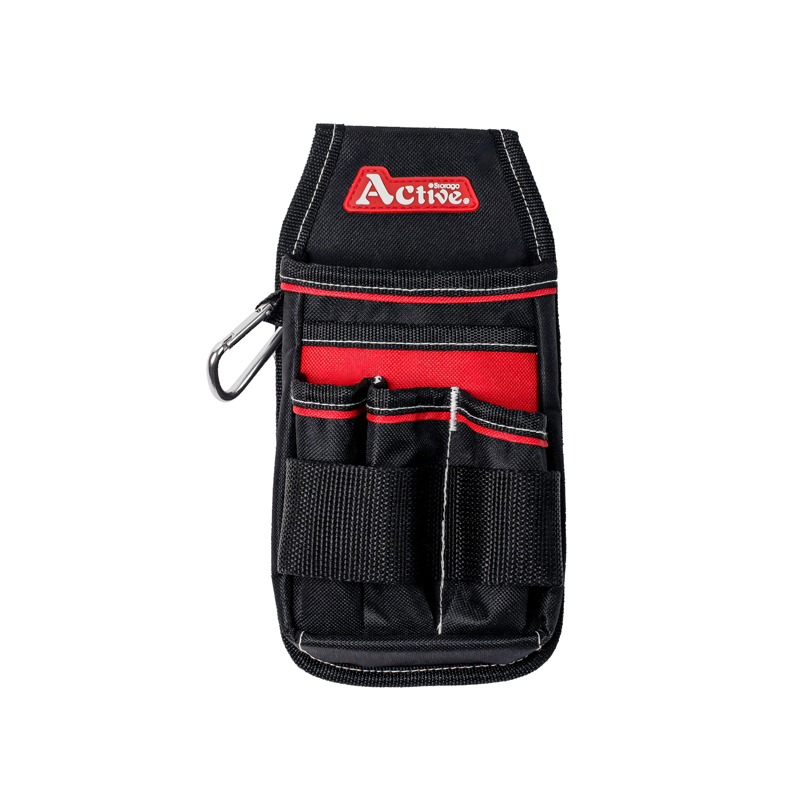
A good example of the second and third points working together is our multi-pocket organizer pouch, which keeps a fixed pocket map at the front and a slimmer profile at the back so the bag does not tip forward when the wearer bends.
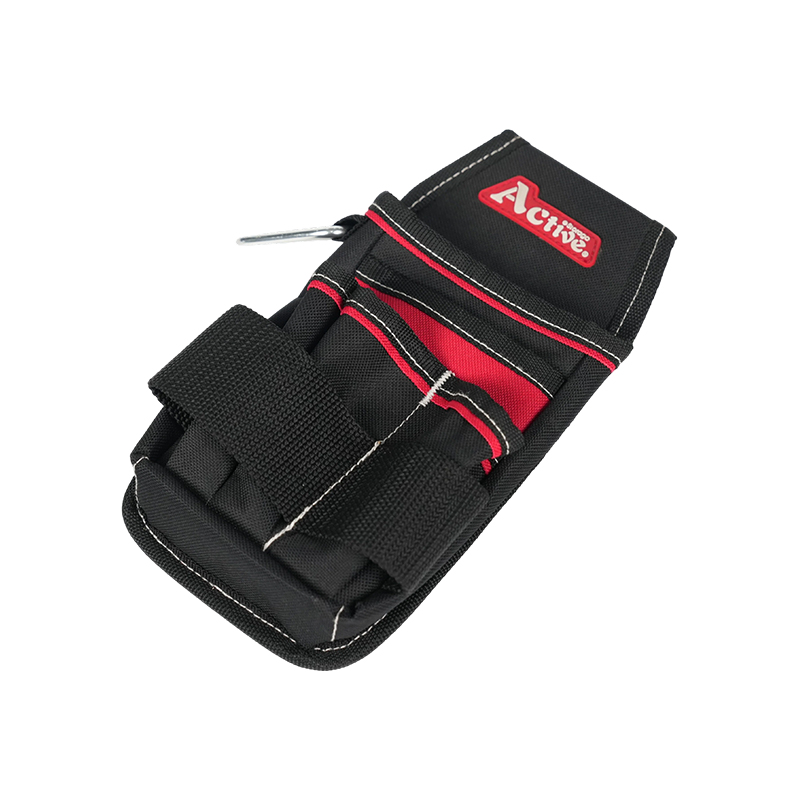 Heavy-Duty Multi-Pocket Electrician Tool PouchRugged synthetic-fabric pouch with tiered pockets, padded multimeter storage, molded base, and swing-link hammer holder for organized belt-mounted electrical work.View Product →
Reading a Spec Sheet in the Right Order
Buyers new to the category tend to start with denier. It matters, but on our list it comes third.
Fabric, then hardware, then geometry
On fabric, the weave density and the polyurethane backing tell you more about abrasion life than the headline number does. A tight 600D with a sound backing will outlast a loose heavier weave almost every time, because pouches wear where tools enter and leave, not where they hang.
On hardware, the belt clip is the part most likely to disappoint. Spring tension, rivet placement and bar-tacks at the clip corners determine whether the attachment outlives the seam holding it. On geometry, pocket depth per tool type matters more than pocket count — a pouch with fourteen shallow slots usually beats one with six deep ones.
| Component | What we check | Why it matters on site |
|---|---|---|
| Shell fabric | Weave density, PU backing, abrasion resistance | Wear happens at the pocket mouth, not the back panel |
| Stitching | Bar-tacks at clip and pocket corners, stitch density | The clip often outlives a poorly anchored seam |
| Belt attachment | Clip spring tension, loop width, vertical play | A swinging pouch catches on ladders and railings |
| Pocket geometry | Depth per tool, divider rigidity, elastic hold | Shared deep wells lose small tools first |
| Base and edges | Reinforced binding, hard or rubber base options | Kneeling on gravel and concrete is routine |
| Zips and pulls | Coil gauge, glove-friendly pulls, grit tolerance | Gloved hands and dust punish small hardware |
Where a single pouch has to do heavier work — electrical service, for instance — a belt-clip model with a stiffened back panel keeps the shape and keeps the tools facing the right way.
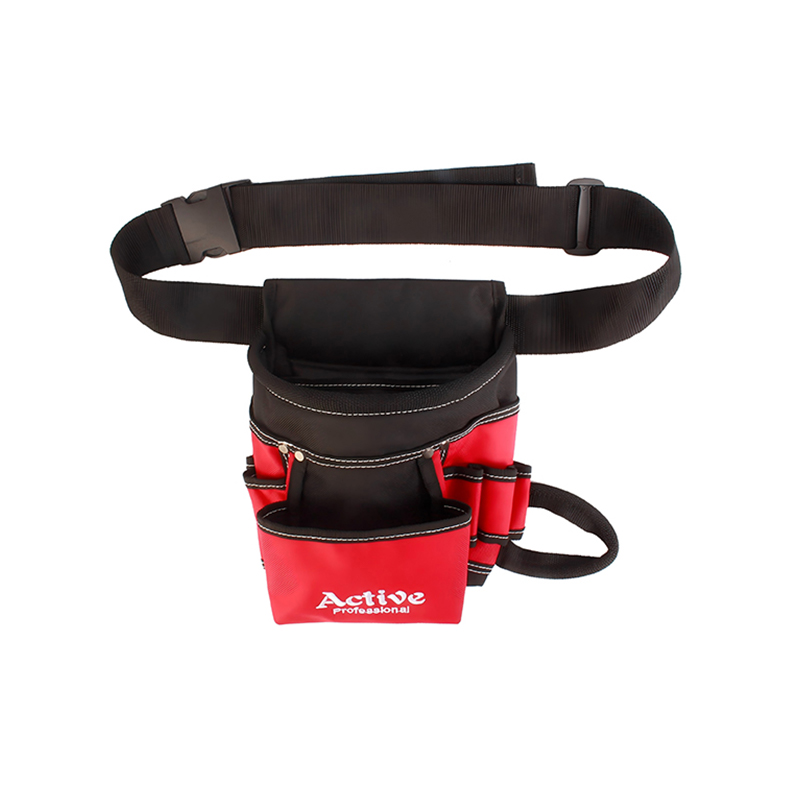 Electrician Tool Pouch and Heavy-Duty Work Belt SetBallistic-nylon pouch set with quick-release belt clip, twelve pockets, tape measure clip, hammer loop, and padded support belt for stable job-site tool access.View Product →
How a Custom Pouch Program Actually Runs
Most buyers arrive with a reference pouch and a list of complaints about it. That is a good starting point. Our process usually looks like this:
- Brief. The tool list, carried weight, working environment, target cost and expected annual volume.
- Layout drawing. A dimensioned pocket map with attachment options, typically within a week.
- Prototype. One or two samples in production fabric and hardware, not stand-in materials.
- Field trial. Two to four weeks with real users, ideally including the people who will complain most.
- Sign-off and production. A sealed pre-production sample, inline checks, and third-party audit where required.
To quote accurately and quickly, we need four things: a tool list with rough dimensions, your preferred attachment method, expected annual volume, and whether the pouch ships alone or packed inside a larger kit.
If your programme covers more than pouches, this comparison of tool bags and backpacks for different trades is a useful next step before you fix the range.
Choosing a Manufacturer You Can Actually Audit
Certificates are easy to show and easy to misread. Four questions separate a genuine programme from a brochure:
- What is the current audit cycle, and which corrective actions were raised at the last one?
- Which site will physically produce this order, and can we visit it?
- Who owns the tooling, drawings and any design patents developed for this programme?
- What happens when a spec drifts — who signs off on the change, and how is it documented?
A certificate is a snapshot, not a guarantee. Ask for the date of the last audit and the list of open observations. An honest supplier will answer both without hesitating.
On our side, the answer to those questions is documented: annual third-party audits including BSCI, SEDEX, FCCA and SCS, two domestic factories plus a production point in Cambodia, and an internal development team that produces more than ten new designs a year, some of them patented and shared with partners.
Where a Small Bag Fits in a Big Range
Pouches rarely travel alone. A maintenance programme usually includes a waist bag, a vest for high-access work, and a belt system for power tool users who want the drill to release without unclipping anything. That last category has become one of the more interesting corners of our range, because quick-release hardware changes how a technician plans a task.
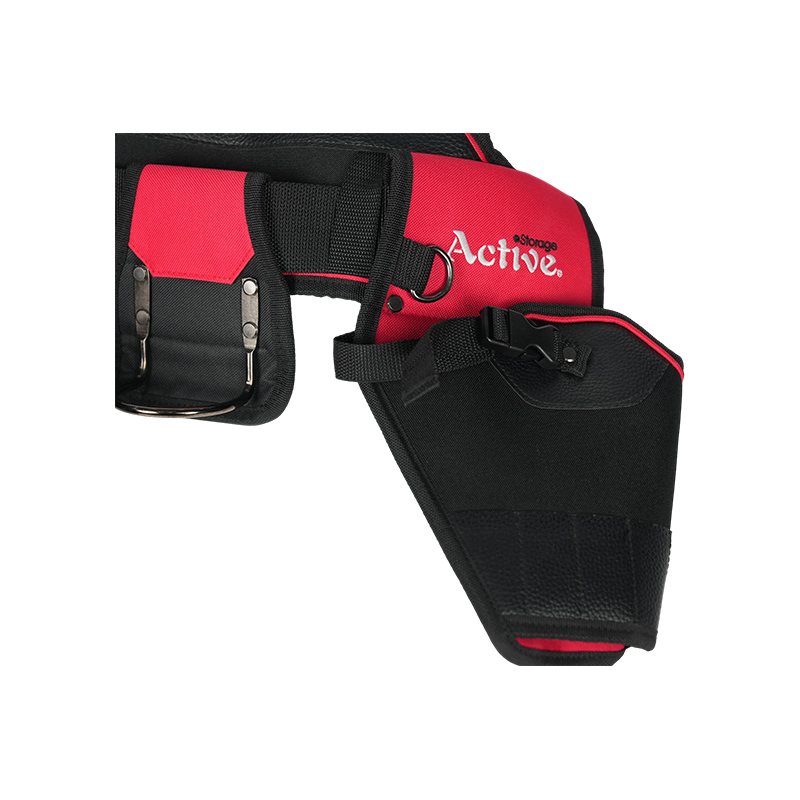 Modular Quick-Release Professional Drill Tool Belt SetThree-unit waist belt system with dedicated drill holster, hammer holder, twelve pockets, and quick-release adjustment for electrical and mechanical tasks.View Product →
Our production footprint — more than 200 people, roughly 11,000 square metres of workshop, and a registered brand in Active Storage — exists mainly so that a pouch programme can be scaled into a full range without changing suppliers halfway through.
Nearly every programme we run starts with a sample and a conversation, not a purchase order. That first sample is where most of the value is created.
If you take one thing from this, take the order of review: attachment first, pocket geometry second, fabric third. Get those three right and the pouch disappears into the working day, which is exactly what a good one should do.
We are happy to talk through a spec, argue about pocket depth, or simply send a sample and let your own crew decide. You can see the wider range on our tool pouch and tool bag collection, and if your requirements are specific, that is usually where the useful conversation begins.
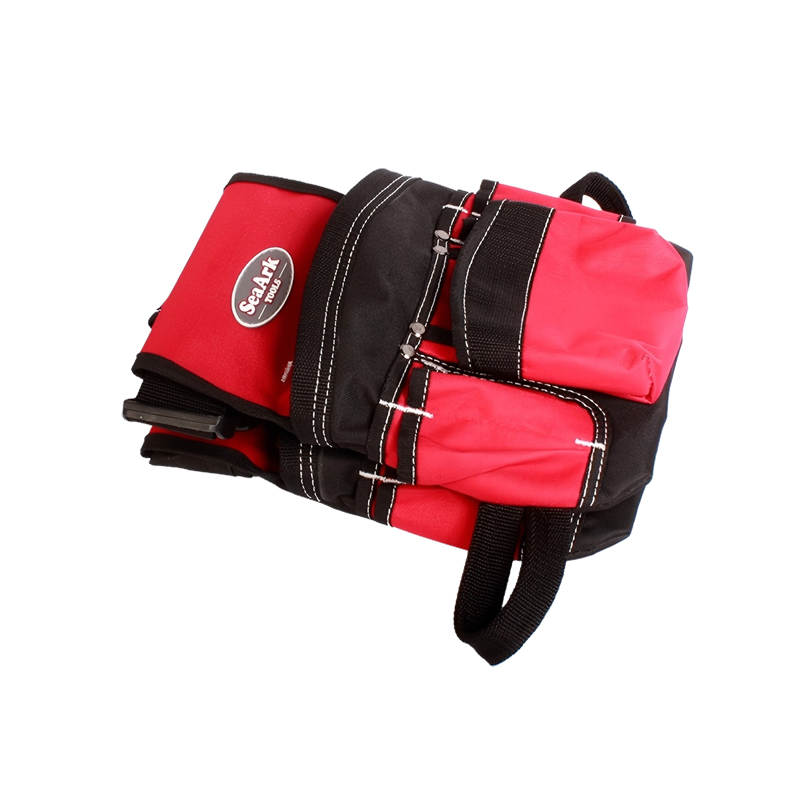



We are a professional enterprise engaged in exporting various types of toolkits.
We firmly believe that 'quality is everything, service enhances value'.
-
+86-15298800699

-
+86-512-58670375

-
karen@kun-bag.com

-
Building 11, No. 93 Chengang Road, Zhangjiagang City, Jiangsu Province, China

Copyright © Zhangjiagang Seaark Tools Industrial Co., Ltd. All Rights Reserved.
Custom Electrician Tool Backpack Manufacturers