
 en
 русский
 Español
 Deutsch

Waist Tool Bag Manufacturing Process: Engineering for Daily Jobsite Loads
An electrician reaches up to fasten a cable tray, then drops to one knee to adjust a floor ring. Every time the torso changes angle, the waist tool bag has to follow without shifting, sagging, or cutting into the hip. This is not a matter of choosing a thicker fabric alone. The waist tool bag manufacturing process determines whether a product can hold that geometry day after day. A well-built waist bag is engineered around weight distribution, pocket placement, and the junction between belt and body. That is why sourcing a waist bag should start with understanding how it is actually made.
Why Waist Tool Bag Manufacturing Differs from Other Tool Bags
Unlike a backpack that spreads load across both shoulders or a tote that is carried by hand, a waist tool bag depends entirely on the belt assembly and the rear panel that sits against the body. The torso rotates, bends, and twists hundreds of times during a shift. Manufacturing therefore needs to create a bag that is both rigid enough to keep pockets open and soft enough to follow natural movement.
- Center of gravity sits at the waist, so pocket depth and layout directly affect balance.
- The belt width and cushioning determine long-term comfort under repeated loading.
- Seam placement at the back panel must avoid contact pressure points.
- Belt attachment needs to absorb pull from tools rather than tear from the fabric.
In practical terms, this means waist tool bag production uses thicker webbing, denser stitching, and more reinforcement than an average utility pouch. It also means the relationship between fabric, interlining, and belt has to be designed as a single system.
The Waist Tool Bag Manufacturing Process, Step by Step
Step 1: Material Selection and Incoming Inspection
Production begins with fabrics that match the intended use. For professional waist bags, 600D polyester is common for light commercial duty, while 1680D nylon is preferred for daily jobsite abuse. The belt webbing is usually 1.5 to 2 inches wide, made of polyester webbing with a tight weave, and the buckle is chosen after a pull-test check.
Incoming fabric rolls are inspected for weight, coating adhesion, and color consistency. A PU or water-resistant coating is often confirmed with a water repellency test before the material enters the cutting line.
Step 2: Cutting and Interlining Preparation
Panels are cut with precision using CNC or die-cut patterns that minimize waste. Main body pieces, pocket linings, and back-support panels are cut separately from the same production lot to avoid shade differences. Interlining or foam is laminated to the back panel to give structure without stiffness.
Step 3: Pocket Layout and Stitching Sequence
The stitching sequence is planned so that high-stress seams are sewn before edge binding. Pocket openings are reinforced with double rows of stitches, and bartack reinforcement is applied at the ends of belt slots, loop attachments, and pocket corners. A typical rule is at least four stitches per centimeter on the main seams.
For inventories that carry many small parts, a high-density pocket arrangement can make the difference between a usable waist bag and one that swallows tools.
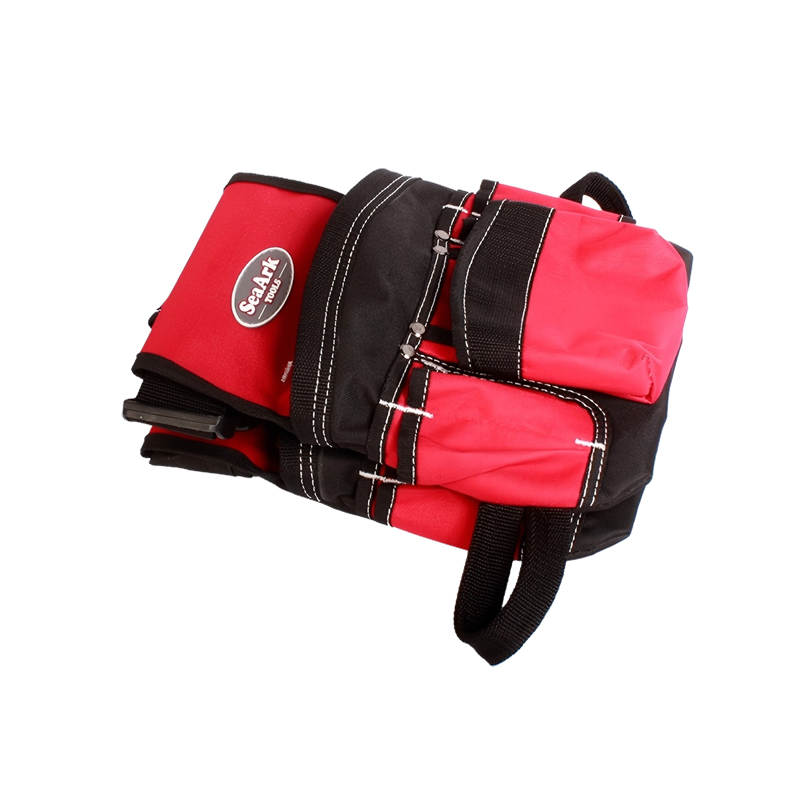 High-Density 32-Pocket Refined Storage Tool Bag with Modular LayoutThis waist bag offers 32 organized pockets and a sturdy belt for technicians handling many small parts, making it ideal for quick access and precise tool separation.View Product →
Step 4: Belt, Buckle, and Load-Bearing Assembly
The belt is the structural spine of a waist bag. Webbing is inserted through the back panel and stitched with a box-and-X pattern to prevent it from pulling loose under load. Buckles are tested for engagement cycles and tensile strength. Some configurations add a padded inner belt for long shifts.
“The belt is the foundation. If the webbing attachment fails, no pocket layout can save the bag.”
For users who alternate between carrying drills and hand tools, a modular quick-release belt set can be adapted to different pouch arrangements.
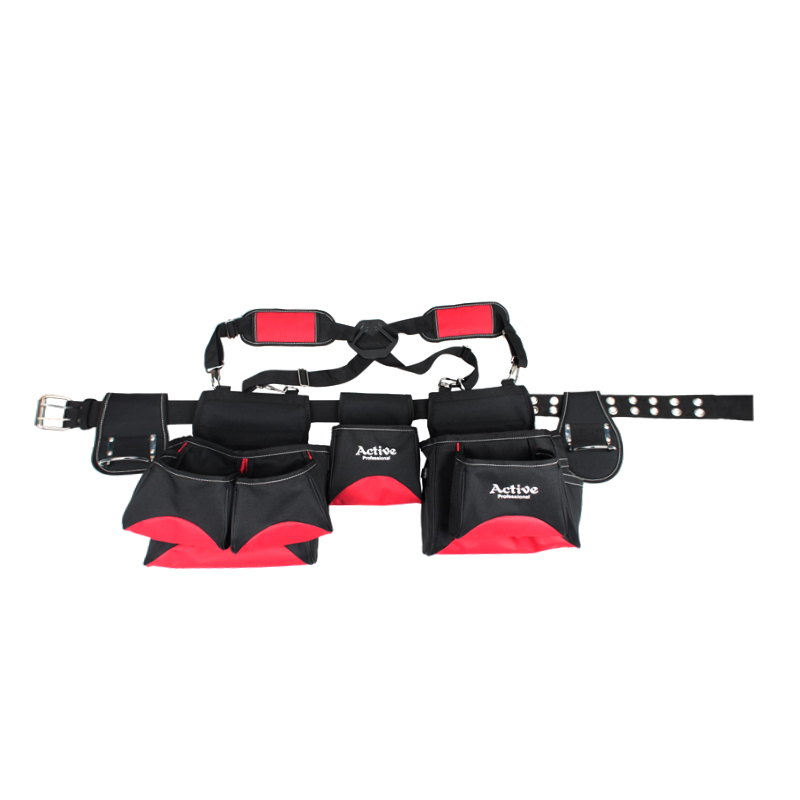 Decompression-Type Multi-functional Heavy-Duty Tool Waist PackWith a 33 lb load capacity and reinforced stress areas, this waist pack supports heavy tools while the padded strap and belt reduce fatigue for long shifts.View Product →
Step 5: Edge Binding, Finishing, and Final Inspection
After the main assembly, edges are bound to prevent fraying, loose threads are trimmed, and zipper or hook-and-loop closures are checked. Each bag is inspected for skipped stitches, uneven seams, and faulty buckles. A final pull test is performed on the belt attachment before packaging.
Quality Checks That Matter in Waist Tool Bag Production
Quality control is about verifying the details that cause premature failure in the field. The table below shows the checks that are performed on a standard professional waist bag before shipment.
| Test item | Method | Pass criterion |
|---|---|---|
| Belt pull-out | Clamp webbing and apply perpendicular pull | No seam separation at 30 kg |
| Seam strength | Tensile test on main back panel seam | No tear below 15 kg |
| Stitch density | Count stitches under a magnifier | At least 4 stitches per cm |
| Buckle durability | Insertion and release cycles | 10,000 cycles without failure |
| Fabric weight | GSM scale on pre-cut panels | Within 5% of specification |
Custom Waist Tool Bag Development: What OEM Buyers Should Evaluate
When commissioning a custom waist tool bag, the first question is not color or logo placement. It is how the belt, back panel, and pockets work together for a defined group of end users. Electricians benefit from narrow, deep pockets for screwdrivers and wire nuts; carpenters may need larger open pouches for hammers and measuring tapes; drill-focused users prefer a fitted holster with quick access.
An experienced manufacturing partner will normally build a sample first, then adjust pocket width, belt stiffness, and buckle style based on user feedback.
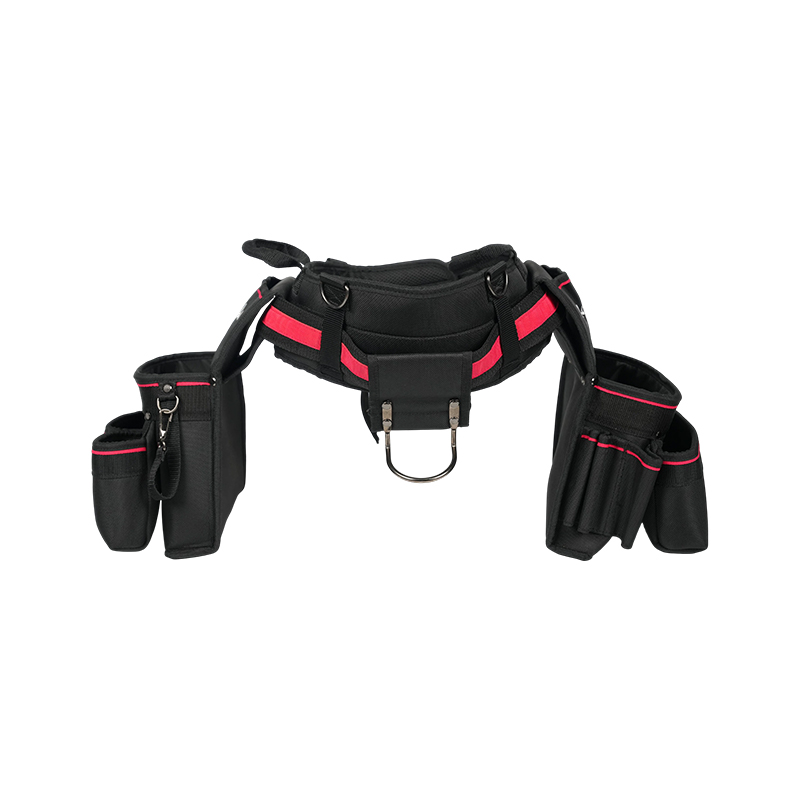 Woodworking and Construction Worker Specific Tool Waist BagBuilt from abrasion-resistant polyester with eight pockets and a hammer loop, this pouch suits craftsmen needing durable, balanced tool organization on job sites.View Product →
Choosing a Waist Tool Bag Manufacturer That Can Scale
If you are sourcing for a brand or distribution channel, the factory's ability to scale is as important as the sample quality. Look for a maker that runs multiple production lines, checks material lots consistently, and has experience with export orders. The manufacturing process is not a single event; it is repeated through every batch, and small deviations in webbing thickness or stitch tension can change the final product.
When evaluating a supplier, ask how they handle belt attachment failure in return inspections, and whether they have a structured quality gate between sewing and packing. You can also see how we think about tool bag ergonomics in our comparison of a tool bag versus a backpack. For the full range of professional tool carrying equipment, you can return to our product overview.
The Result: A Waist Tool Bag Built for the Jobsite
A waist tool bag fails differently from a backpack. It fails at the belt, at the pocket mouth, or at the seam where the tool weight pulls sideways. Manufacturing that succeeds is manufacturing that addresses those three points with deliberate material choices, stitch patterns, and load testing. When you evaluate a supplier, do not only look at the front pocket layout. Look at how the belt is anchored and how the bag behaves once it is loaded. That is where the real manufacturing quality becomes visible.
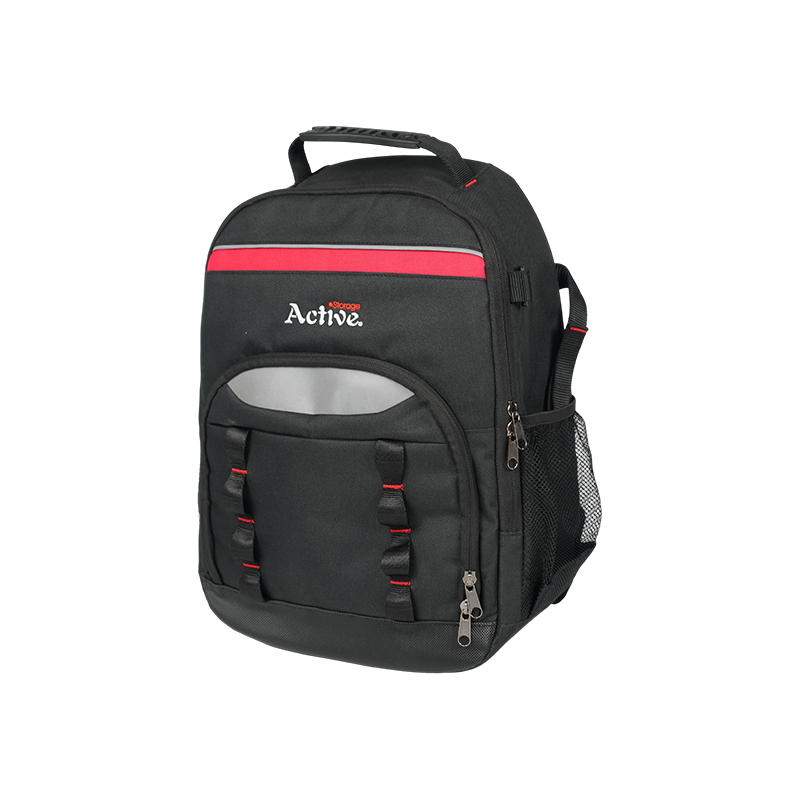



We are a professional enterprise engaged in exporting various types of toolkits.
We firmly believe that 'quality is everything, service enhances value'.
-
+86-15298800699

-
+86-512-58670375

-
karen@kun-bag.com

-
Building 11, No. 93 Chengang Road, Zhangjiagang City, Jiangsu Province, China

Copyright © Zhangjiagang Seaark Tools Industrial Co., Ltd. All Rights Reserved.
Custom Electrician Tool Backpack Manufacturers