
 en
 русский
 Español
 Deutsch

Multi-Functional Bag Guide: Carry Modes, Interior Geometry, and Base Construction
Multi-Functional Bag
Multi-Functional Bag Design: What Separates a Working Tool From a Label
Carry systems, interior geometry, base construction and the sourcing questions that decide whether one bag can genuinely replace three.
A two-person electrical crew pulls up to a fit-out and unloads four bags: hand tools, power tools, consumables, test equipment. By mid-morning the fourth bag is back in the van, because it is the wrong shape for the way the work moves. That is the problem a multi-functional bag is meant to solve, and extra pockets are not the answer.
The answer is mechanical, and it comes down to three decisions. The carry system has to be reconfigurable without tools; the interior has to change volume or layout without losing parts; the base has to survive being dragged across gravel and concrete. Everything else on the feature list is decoration. The sections below turn those three decisions into specifications a buyer can write down, quote and inspect.
What Multi-Functional Actually Means in a Tool Bag
In tool carrying, multi-functionality is measured on three axes rather than described in adjectives:
- Reconfigurable carry: the same body works as a backpack, a shoulder tote or a wheeled trolley, and the change takes seconds with gloves on.
- Variable interior: removable dividers, a lift-out tote or fold-down panels let one shell hold a drill case today and a full meter set tomorrow.
- Multi-posture use: a mouth that folds fully open and stays open, a lid that doubles as a seat, or a base stiff enough to keep the bag upright while both hands are working.
A bag that scores on only one axis is a specialist bag with marketing language attached. The useful test is mechanical: can the user change the configuration in work gloves, and does the bag still close properly afterwards?
| Design axis | What it looks like | Field test | Procurement risk |
|---|---|---|---|
| Reconfigurable carry | Telescopic handle and wheels on a backpack frame, or a detachable shoulder strap | Load 15 kg, pull it over a 3 cm lip, then carry it up one flight of stairs | Added hardware weight and cost; strap anchors pulling through the body fabric |
| Variable interior | Lift-out tote inside a hard-base shell, or fold-down divider panels | Remove the tote, fill the shell with a drill case, then refit the tote | Higher parts count per unit and more SKUs to hold in stock |
| Multi-posture use | Wide-mouth body that folds flat, or a folding seat built into the lid | Open it on uneven ground and check whether the mouth stays open hands-free | Hinge fatigue and seam stress along the fold line |
Read that table as a cost ladder. Each axis adds parts, tooling and inspection steps, which is why a true three-axis bag costs more to build than a fixed-shape bag of the same volume, and why a supplier quoting both at the same price is usually saving money on fabric weight or hardware somewhere the buyer cannot see.
Carry Mode Is the First Specification to Lock
Carry mode fixes the frame, the fabric weight and the price floor, so it should be settled before pocket counts. The payload figures below are working ranges from professional use, not laboratory maximums.
| Carry mode | Working payload | Where it fits | Watch out for |
|---|---|---|---|
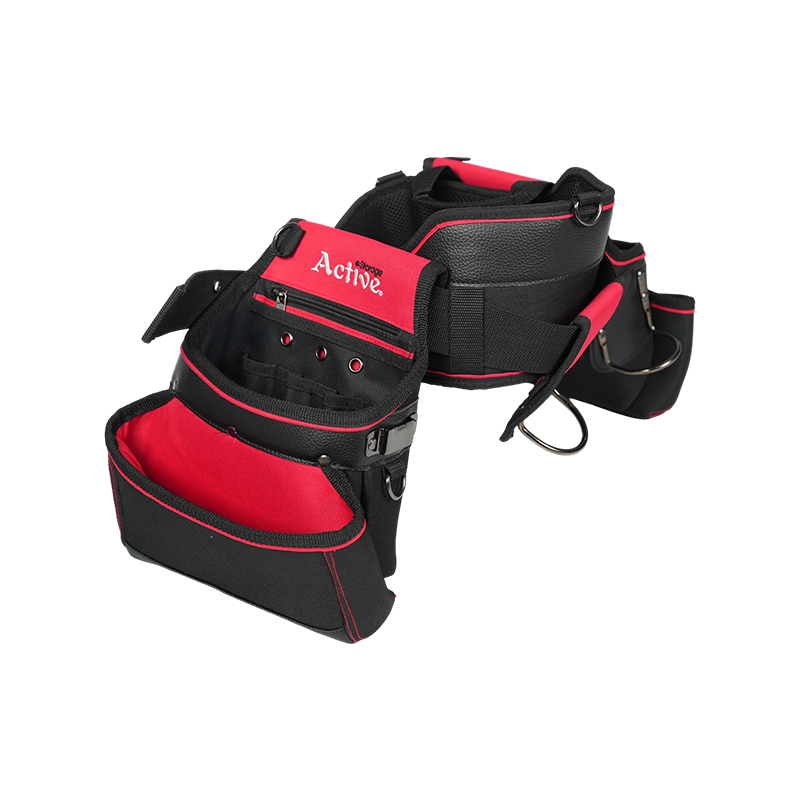
| Waist bag or tool pouch | 2 to 4 kg | Electrical, fit-out, tight spaces | Weight sits on the hips all day; belt width and padding decide comfort |
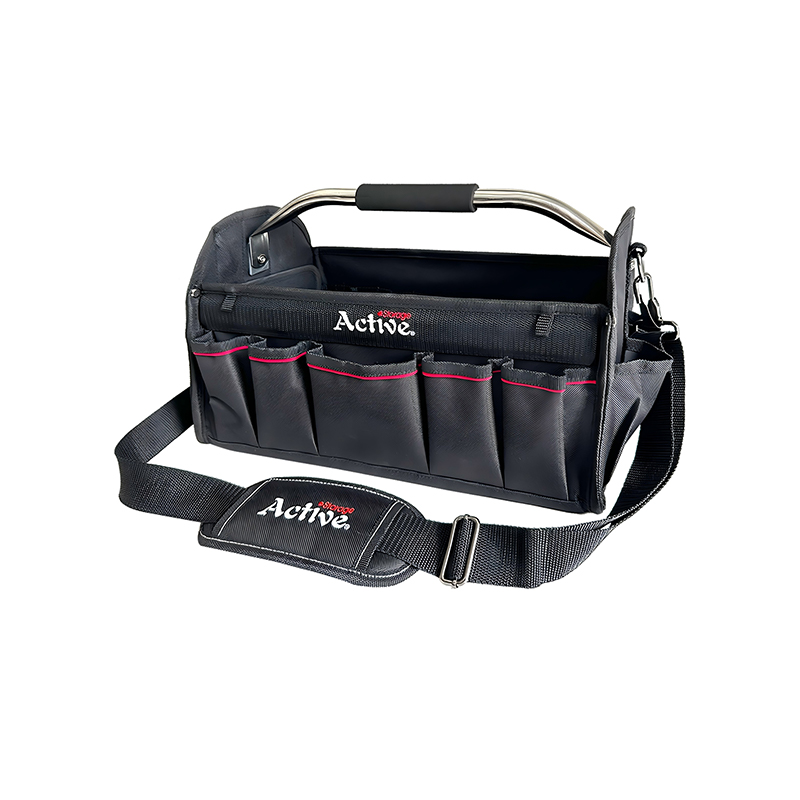
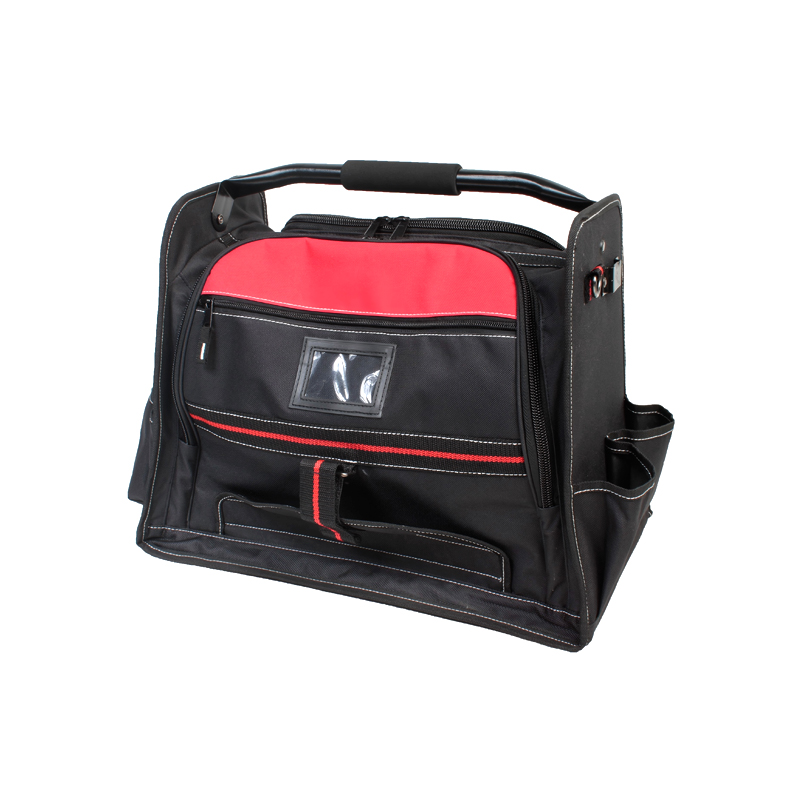
| Shoulder tote or multi-pocket organizer | 5 to 10 kg | Service calls with mixed hand tools | Single-shoulder load; needs a padded, adjustable strap and reinforced anchors |
| Backpack with hard base | 12 to 20 kg | Multi-trade maintenance, stairs, roofs | It must be worn, not carried; back support and base stiffness matter |
| Trolley or wheeled bag | 20 to 40 kg | Vehicle-to-site transport, warehouse work | Wheel diameter decides whether gravel and kerbs are passable |
| Bucket organizer | 8 to 15 kg with pail | Garden, landscape, loose materials | The pail is not always included; pocket count drives perceived value |
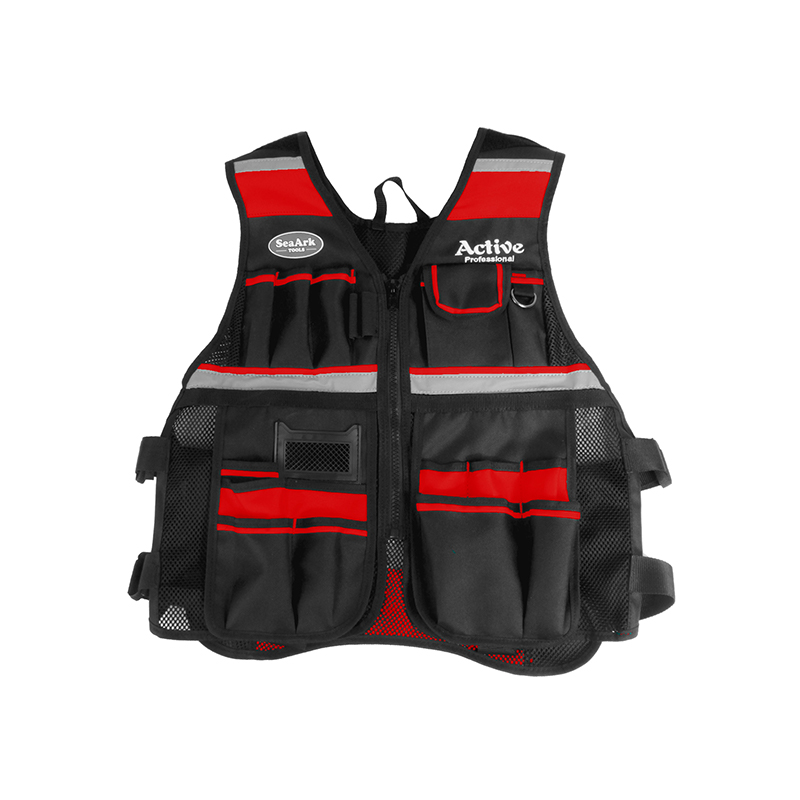
| Tool vest | 3 to 6 kg | High-frequency access, aerial work | Sizing range and how the load spreads across the shoulders |
Two consequences follow. First, a bag claiming backpack, trolley and tote modes at once has to solve the load problem three times: the frame that stabilises a trolley adds weight to a backpack, and tote geometry presses in the wrong place on a shoulder.
Second, wheel diameter decides whether a wheeled bag is genuinely multi-functional outdoors. Omnidirectional wheels are excellent on tile and warehouse floors; gravel, kerbs and cable trays need a wider dual wheel. If a program covers both environments, specify wheels as a variable part rather than a fixed one.
Where the choice between formats is still open, a direct tool bag versus backpack comparison is often faster than another sampling round.
For crews moving between a van, a stairwell and a live floor, a trolley backpack that converts between wheeled and worn carriage usually replaces two purchases: the roller for transport and the backpack for the last two hundred metres.
Fabric, Base and Load Path: Where Multi-Functional Bags Fail First
The first failure is almost never the main fabric. It is the base, or the seam where the base meets the body. Multi-functional bags carry more and get dragged more, so abrasion and stitch fatigue arrive earlier than on a fixed-shape bag. Six points are worth writing into the purchase order:
- 600D polyester or heavier, with a PU backing for water resistance, quoted in grams per square metre rather than a trade name.
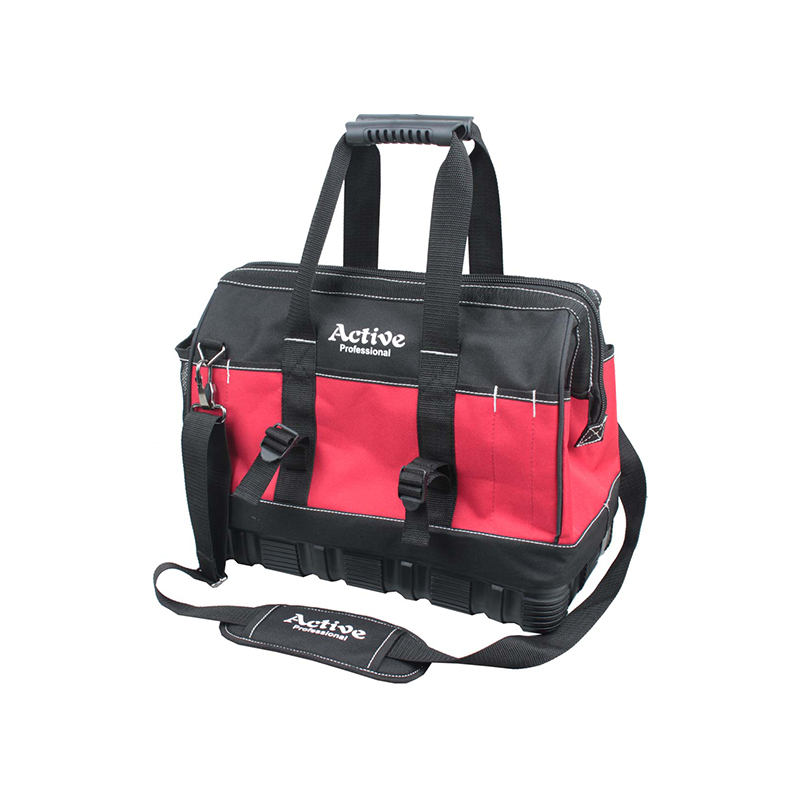
- A rigid base, meaning a PE board or a moulded plastic panel, not a foam pad that compresses after one season.
- A rubber bottom or plastic foot pads to take abrasion and keep the bag standing when it is set down on uneven ground.
- Steel wire or a metal frame at the mouth, so a wide opening stays open with one hand while the other hand reaches in.
- Double stitching and bar tacks at every strap anchor, handle root and lid hinge.
- Hardware chosen for the payload: zips sized to the load and a telescopic handle with field-replaceable wheels.
Those six points are checkable. Fabric weight, base thickness, stitch density and anchor pull strength can all be tested, and a supplier should quote a number rather than an adjective. Tolerance matters too: on a moulded base panel, plus or minus three millimetres is a reasonable expectation, and anything looser shows up as a bag that rocks on a flat floor.
Multi-functionality is a load-path question before it is a packaging question. A bag only does two jobs if it can be loaded properly for two jobs.
Matching One Bag to Several Trades
The trades that gain most from a multi-functional bag share a pattern: a fixed core of tools plus a changing set of consumables.
Electrical and fit-out work
Electricians need fast access more than raw volume: insulated loops, a belt-clip pouch for meters and testers, a wire-reinforced mouth that stays open, and a hard base for standing the bag on a finished floor. A multi-pocket organizer with an adjustable shoulder strap covers most service calls, while the large-capacity bags stay in the van.
Woodworking and construction
Payloads grow and openings widen. A wide-mouth bag that folds fully open lets a carpenter see every tool at once, and a waist bag keeps fasteners and a tape measure within reach while both hands are holding a frame.
Automotive repair and detailing
Roller bags with large openings suit a bay where the bag is pushed rather than carried. Detailing adds one requirement that is easy to miss: no exposed hardware on the base that can scratch paintwork.
Garden and landscape work
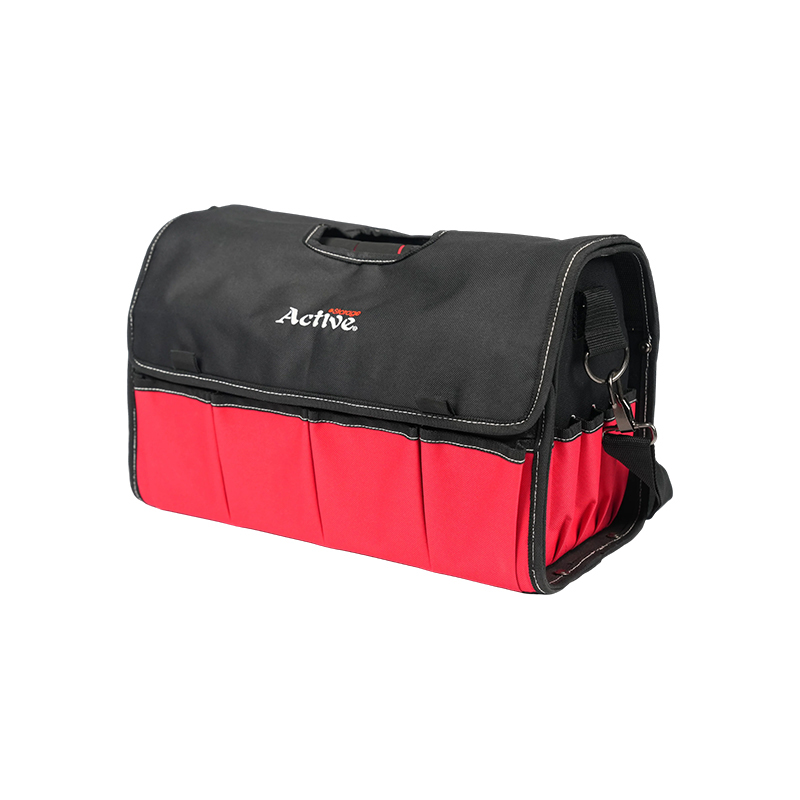
Garden maintenance is the clearest case for a tote-style bag. A tote with 21 pockets lifts hand tools, twine, gloves and a bottle in one move, and a 30-pocket bucket organizer turns a standard five-gallon pail into mobile storage at a similar price point.
Sourcing a Multi-Functional Bag Without Adding Program Risk
Once the specification is settled, the questions that protect a program are commercial rather than technical.
- Which carry mode is primary and which are secondary? The price follows the primary mode.
- Which parts are user-removable, and how are spares supplied after the first order?
- What are the stated fabric weight, base construction and stitch density?
- Which factory audits and test reports are current?
- What is the sampling timeline, and what is the minimum order per colourway?
- If the design is co-developed, who owns the tooling and the pattern?
Compliance is usually the first question a European or North American buyer asks. BSCI, SEDEX, FCCA and SCS audits are the common baseline for retail and industrial channels, and a supplier running more than one production site, for example two plants in Jiangsu plus a production point in Cambodia, can absorb a capacity or tariff shock without moving the buyer's tooling.
For programs that mix categories in a single order, such as a hard-base trolley backpack, a waist pouch and a garden tote, it helps to work with a tool bag manufacturer that develops its own frames, moulds and patterns rather than re-selling catalogue items.
One last test is worth the effort: load a production unit to 120 percent of its rated payload and carry it for the length of a working shift. Multi-functional bags fail in the second hour, not the first.
The Decision in Three Questions
A multi-functional bag is a load-path product, not a feature list. Before the purchase order, three questions matter: does the bag change carry mode without tools, does it change interior volume without losing parts, and does the base survive being dragged?
Three yes answers justify the premium, and the bag will replace two or three single-purpose purchases in daily use. One yes answer means the buyer is paying for a longer feature list and getting a shorter service life, which is the most expensive outcome in tool carrying.



We are a professional enterprise engaged in exporting various types of toolkits.
We firmly believe that 'quality is everything, service enhances value'.
-
+86-15298800699

-
+86-512-58670375

-
karen@kun-bag.com

-
Building 11, No. 93 Chengang Road, Zhangjiagang City, Jiangsu Province, China

Copyright © Zhangjiagang Seaark Tools Industrial Co., Ltd. All Rights Reserved.
Custom Electrician Tool Backpack Manufacturers